 how-to
How to Avoid Hidden Fees on a Used Car Purchase
Table of Contents
- Start With an Itemized Written Quote, Not the Sticker Price
- How to Calculate the Used Car Out-the-Door Price
- Common Used Car Dealer Fees to Question
- Which Used Car Add-Ons and Extras Can You Decline?
- Used Car Purchase Agreement Fees: What to Review Before You Sign
- Online, Remote, and Delivery Charges to Watch
- What to Do If You Find an Undisclosed Fee After the Sale
- Conclusion
- Frequently Asked Questions
Last Updated: October 12, 2026
Start With an Itemized Written Quote, Not the Sticker Price
The advertised price on a used car is almost never the price you pay. That gap is where hidden fees used car buyers face live, and the fastest way to close it is to ask for a full breakdown in writing before you talk financing, trade-ins, or monthly payments.
A hidden fee is any charge added to a used car deal that was not clearly disclosed in the advertised price or itemized quote before you agreed to buy. It shows up as a line item on the bill of sale that you never approved.
At Automaxx, we quote the full amount in writing up front because we know how much damage a surprise charge does to trust. Here is how to protect yourself, step by step.
Office of Consumer Affairs guidance on vehicle purchases
What Counts as a Hidden Fee on a Used Car
Three things turn a normal charge into a hidden one:
- A fee that was never mentioned until you sat down to sign
- A charge buried in a monthly payment so you cannot see the total
- An add-on you declined verbally but that still appears on the contract
Mandatory Charges vs. Optional Add-Ons
Mandatory charges apply to every buyer and cannot be removed. Optional add-ons are yours to decline.
| Charge Type | Examples | Can You Remove It? |
|---|---|---|
| Mandatory | Sales tax, registration, licensing | No |
| Dealer-set | Documentation, administration, prep | Often negotiable |
| Optional | Warranty, protection packages, accessories | Yes |
How to Calculate the Used Car Out-the-Door Price
The out-the-door price is the total you pay to drive away, including every fee, tax, and add-on. It is the only number that matters when comparing two vehicles, not the advertised price, not the monthly payment, and not the "sale price" a salesperson writes on a business card.
A Simple Out-the-Door Worksheet
Use this worksheet for every vehicle you consider. Fill in the numbers yourself, and ask the dealer to confirm each line in writing.
- Advertised price: $______
- Documentation or admin fee: $______
- Dealer preparation or inspection fee: $______
If a dealer will not fill this in, that is your answer.
Worked Example: Why the Monthly Payment Lies
Suppose two dealers quote the same vehicle. Dealer A advertises $18,500 and adds a $699 documentation fee, a $399 prep fee, and a $299 "security" charge at signing.
Now finance it. If you roll Dealer A's extra $697 into a 60-month loan at a typical used-car rate, you pay interest on that $697 for five years.
How Fees Change the Amount Financed
Every dollar of dealer-set fee or optional add-on that gets rolled into financing increases three things at once:
- The principal, the amount you borrowed
- The monthly payment, because you are paying interest on a larger principal
- The total interest paid, because interest compounds on the higher balance over the full term
A $500 add-on financed over 60 months at a typical rate does not cost $500. It costs $500 plus the interest it accrues. That is why the out-the-door price and the financed amount should be compared side by side, not treated as the same number.
Compare Offers on Two Numbers, Not One
When you shop, write down two figures for each vehicle:
- Out-the-door cash price, what you would pay if you wrote a check today
- Total cost of credit, the out-the-door price plus all interest and fees over the life of the loan
The second number is the one that actually leaves your bank account. Ask the dealer for both in writing.
Common Used Car Dealer Fees to Question
Not every charge is unfair. But you should know what each one is for before you agree to it.
Documentation and Administration Fees
These cover paperwork and back-office work. They are set by the dealer, not the government, which means they are often negotiable. Ask what the fee includes and whether it can be reduced.
Government Charges: Tax, Registration, and Licensing
Sales tax, registration, and licensing are set by government and passed through by the dealer. These are not profit centers, so do not waste time trying to negotiate them. Alberta's motor vehicle registry system is run through Alberta Transportation vehicle registration services, which is where you can confirm what you actually owe.
Which Used Car Add-Ons and Extras Can You Decline?
Every optional product on a used car deal can be removed or reduced. Dealers count on buyers not knowing that.
Protection Packages: Paint, Fabric, and Anti-Theft
Paint protection, fabric protection, VIN etching, and anti-theft devices are all optional. Some buyers find value in them. Many do not. If you do not want them, say so clearly and check that they are gone from the contract.
Extended Warranties and Service Contracts
An extended warranty or service contract is optional unless it is built into your financing as a condition. Read the terms carefully. Ask what is covered, what is not, and how long it lasts. If it does not fit your budget, decline it in writing.
Used Car Purchase Agreement Fees: What to Review Before You Sign
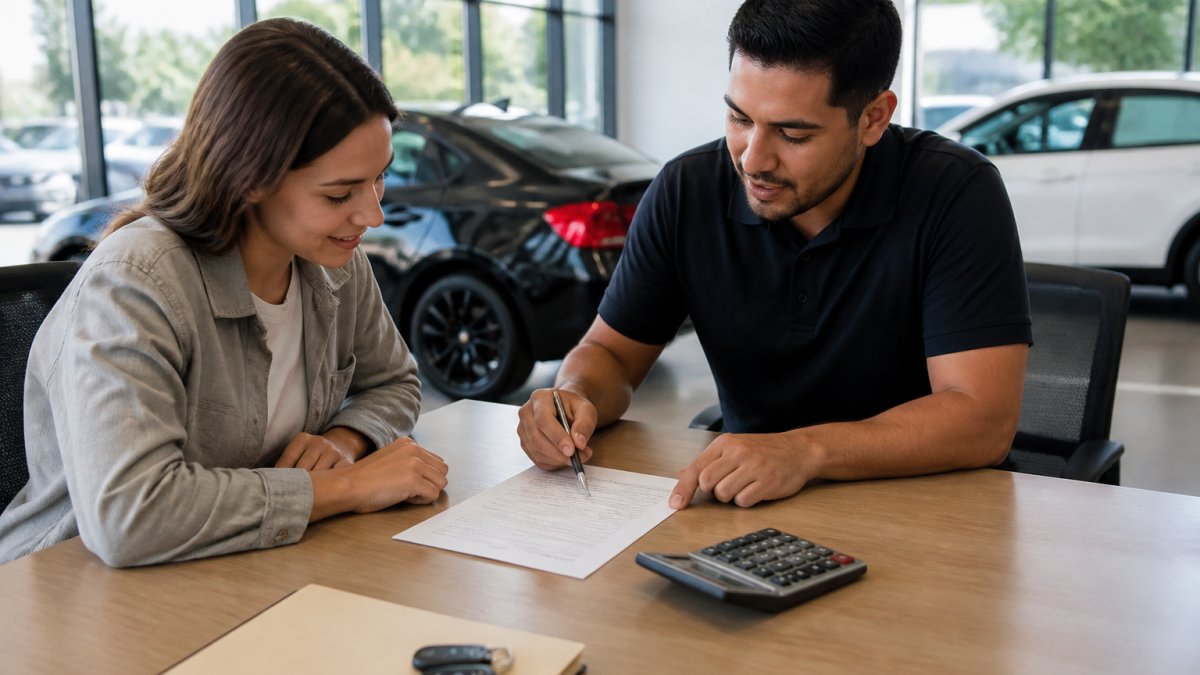
The purchase agreement is the final word. Whatever is on it is what you agreed to pay, whether or not you remember discussing it.
Before you sign, do these three things:
- Read every line, including the fine print at the bottom
- Match each fee against your itemized quote
- Ask about anything you do not recognize
If a hidden fees used car charge appears that was not on your quote, stop and ask. A legitimate dealer will explain it.
Online, Remote, and Delivery Charges to Watch
Buying remotely adds a new set of charges that are easy to miss. Delivery fees, remote paperwork fees, and shipping costs are common when you buy without visiting in person.
Ask for the full out-the-door price in writing before you commit, including any delivery charge. If you are picking the vehicle up yourself, confirm that no delivery fee applies.
What to Do If You Find an Undisclosed Fee After the Sale
You still have options, but the clock matters. The longer you wait, the harder it is to show the fee was not part of your original agreement. Move quickly and keep everything in writing.
Step 1: Stop Signing and Pause the Deal
If you have not yet signed the final bill of sale, do not sign it. Tell the dealer you need time to review the itemized charges against your quote. A legitimate dealer will wait. If you have already signed, do not sign any additional documents, including financing paperwork, until the discrepancy is resolved.
Step 2: Gather and Preserve Your Documents
You need three documents to make a credible complaint:
- The itemized written quote you received before the sale
- The purchase agreement you signed
- The bill of sale showing the final charges
If you do not have the quote in writing, check your email and text messages. A written quote sent by email is far stronger evidence than a verbal promise. Save screenshots of any online listing that showed a different price.
Step 3: Identify the Exact Fee and Why It Is Undisclosed
Write down the specific line item, the amount, and where it appeared. Was it:
- A fee never mentioned before signing?
- An add-on you declined verbally but that still appears on the contract?
- A charge buried inside the financed amount rather than shown as a line item?
Being specific matters. "There was a hidden fee" is weak. "A $499 VIN etching charge appears on the bill of sale that was not on my written quote and that I declined verbally" is strong.
Step 4: Contact the Dealer in Writing
Send an email or letter to the dealer, not a phone call. State the fee, the amount, and what you want: a refund, a corrected bill of sale, or removal of the charge from the financing. Give a reasonable deadline for a response. Keep a copy of everything you send and receive.
Step 5: Escalate to the Right Regulator
If the dealer will not resolve it, escalate. The correct body depends on where you live and what the fee was:
- General consumer protection complaints, the federal consumer affairs office publishes guidance on vehicle purchases and how to file a complaint.
- Provincial and territorial consumer protection offices, these handle most dealer-fee disputes, since vehicle sales are regulated at the provincial or territorial level. The office name and complaint process vary by jurisdiction.
- Provincial motor vehicle registries, if the disputed charge relates to registration, licensing, or a government fee that was misstated, the registry can confirm what you actually owed.
Consumer protection complaint process
Step 6: Document Everything and Follow Up
Keep a simple log: date, who you spoke to, what was said, and what was promised. Follow up in writing after every phone call. If you escalate, include your log and copies of your documents. A well-documented complaint moves faster than a vague one.
Conclusion
Hidden fees thrive on confusion and rushed decisions. Slow down, ask for the out-the-door price in writing, and question every line you do not recognize.
At Automaxx, we built our process around that idea.
Get started with Automaxx and buy your next used car with the full price in plain sight.
Frequently Asked Questions
What dealership fees should I avoid when buying a used car?
Focus on optional add-ons you did not request: paint protection, fabric protection, VIN etching, anti-theft devices, and extended warranties. Documentation and administration fees are common but often negotiable, so ask for the amount in writing before you agree. Taxes and registration are mandatory government charges and cannot be waived. Request a full itemized quote so you can see exactly what is required and what is optional, then decline anything you do not want.
Which dealer fees are negotiable on a used car?
Documentation and administration fees are frequently negotiable, especially if you have competing quotes. Optional products such as extended warranties, service contracts, prepaid maintenance, and protection packages can almost always be declined or reduced. Government charges like sales tax and registration are set by law and are not negotiable. Ask for every fee in writing, compare the total out-the-door price between two vehicles, and negotiate the final number rather than individual line items.
What should I check on a used car purchase agreement before signing?
Verify that the vehicle identification number matches the car you inspected, the total out-the-door price matches your written quote, and every add-on listed is something you agreed to. Check the financing terms if applicable, including interest rate, term length, and whether there is a prepayment penalty. Look for any fees that were not in your original quote. If something is unclear, ask for an explanation and a corrected copy before you sign anything.
How can I compare the total cost of two used cars?
Ask each seller for an out-the-door price in writing that includes the vehicle price, all dealer fees, taxes, and registration. Add any financing costs over the life of the loan. Compare those final numbers, not the advertised prices. A lower sticker price can end up costing more once fees and add-ons are included, so the out-the-door figure is the only number that shows the real difference between two vehicles.